#CustomersForLife
Heat Map Visualization in Dynamics 365 CRM
Save Meeting Time With Heat Maps
Imagine wrapping up your annual revenue presentation in under 30 minutes, no lengthy tables, no rows of numbers, just a color-coded map that tells the entire story at a glance.
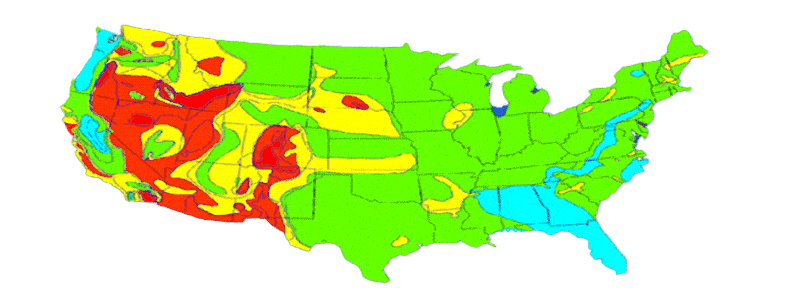
That is exactly what Heat Maps within Microsoft Dynamics 365 CRM make possible. Where you would have spent hours explaining figures, Heat Maps display the same data with better graphical analysis in minutes. Your hottest revenue regions appear in red, your lowest in green, and everything in between follows the temperature scale on the color palette. Your management panel sees the full picture instantly, no questions needed.
What Are Heat Maps in Dynamics 365 CRM?
Maplytics, an app from Inogic, integrates Bing Maps with Dynamics 365 CRM for data analysis, opening up a vast opportunity for Dynamics CRM users, peers, and partners to analyze graphic data using Heat Maps.
Heat Maps in Microsoft Dynamics 365 CRM bring forth a comparative study of records by studying their density over a region. The graphic distribution of leads and other entities across different geographical areas helps you identify the key areas to focus on.
Working With Colors
Color codes denote the saturation of customers over a particular spread. A simple zoom in or out directs you to regions with the highest potential. Heat Maps in Microsoft Dynamics 365 CRM let you dive deep into your market geography. The default colors are red, green, and yellow, all of which can be customized depending on your business requirements.
Ways to visualize Heat Maps
You can visualize a Heat Map within Microsoft Dynamics 365 CRM in four ways: Boundary, No-Boundary, Pie Chart, and Column Chart
Boundary analysis lets you create Heat Maps with defined regions, while the No-Boundary option displays data without any geographic boundaries. Both enable you to view data based on the density of measure and analyze it across the full geographical spread.
Pie Charts and Column Charts
A Pie Chart is a circular data graphic divided into portions to illustrate numerical proportions within Heat Maps in Dynamics 365. It analyzes heat density for a given set of categories, most commonly in percentage, and is widely used by sales teams in presentations to show data distribution.
A Column Chart is a vertical rectangular graphic representation of data, where the length of each bar is proportional to the data value. This comparative analysis of data across areas helps you make better, faster decisions.
Next Time You Have a Presentation, Use Heat Maps
Swap the figures from your lengthy presentation with Heat Map screenshots. Where you would have spent hours explaining the numbers, display them with better graphical analysis within minutes, and leave your management panel with a clearer picture than any spreadsheet ever could.
FAQ's

Can I get Heat Maps based on attribute in Dynamics 365 CRM?
Yes, Maplytics allows you to get Heat Maps based on Dynamics 365 CRM attribute that is termed as measure in the map. With this you can easily plot the Heat Map with different aspects.
Can I download Heat Maps plotted in Dynamics 365 CRM?
Yes, with the help of Maplytics users are able to not just visualize Heat Maps in Dynamics 365 CRM but also download the plotted Heat Maps.
Can I get summary of certain region defined by boundary in Dynamics 365 CRM?
With Maplytics, by clicking over a certain area on the heat map shows the summarized information of the same.
How can I view Heat Map based on charts in Dynamics 365 CRM?
Maplytics allows you view density of data spread with the help of Pie/Column charts. Charts help the users to analyze the Dynamics 365 CRM data on the basis of comparative data shown by the charts on the map.
How can I visualize Heat Map spread on map in Dynamics 365 with boundaries?
Maplytics enables you to visualize Heat Map in different ways. You can view Heat Map based on boundaries with regions like City, Postal Code, Country, etc. defined for Dynamics CRM data. Also, you can view the data spread with No Boundary or Pie/Column Chart.